




Bluetooth item trackers
How Bluetooth item trackers can reveal an item's location
Nearby phones can help locate a tag through a finding network. Unwanted-tracker alerts provide a warning with defined compatibility and evidence limits.
Sources checked .
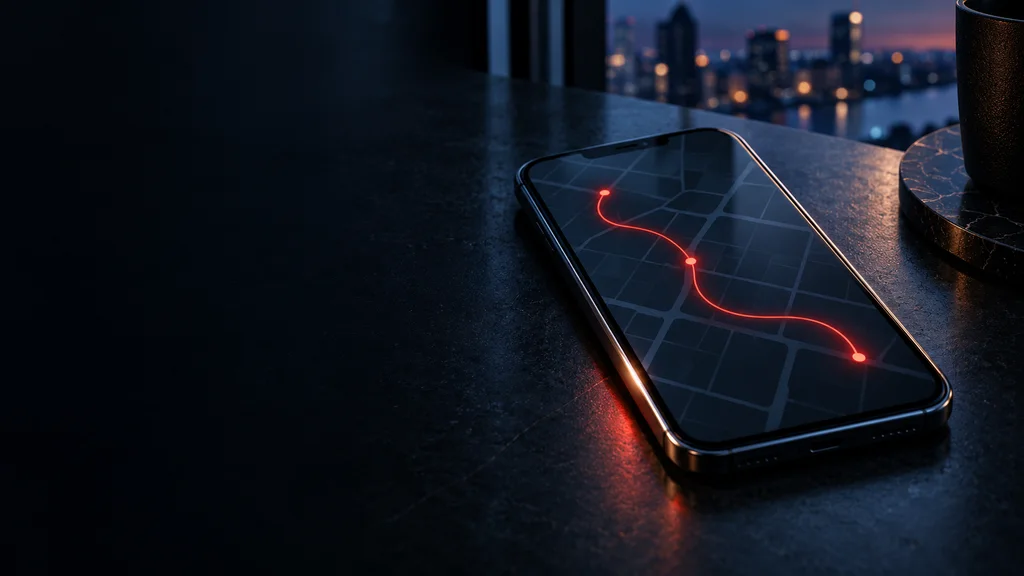
A nearby device can relay an approximate location
Apple describes Find My as a crowdsourced network. Nearby participating devices detect compatible items, including AirTags, over Bluetooth and report an approximate location to the owner. The tag does not need to be beside the owner's phone for that network to help find it. Apple: Find My privacy disclosure
Apple says offline finding reports are end-to-end encrypted so it cannot see the location of an offline or reporting device. That privacy property describes the reporting system. It does not establish consent from someone carrying an item that an owner can locate. Apple: Find My privacy disclosure
An alert identifies a possible shared journey
Apple explains that a compatible item separated from its owner and observed moving with someone over time can trigger an alert. Borrowed belongings or AirPods can also explain a notification. Its map marks detections near the phone; the dots do not show when the owner viewed the location. An alert alone does not establish a person's intent. Apple: unwanted-tracker alert instructions
A manual scan and an automatic alert mean different things
Google lists alerts for Find Hub-compatible tags, headphones and AirTags. Manual scans find nearby separated tags; they do not establish a shared journey. Automatic alerts consider movement over time. Google: Android unknown tracker help
Research findings need their study date and scope
A USENIX Security 2025 paper evaluated notification reliability with 50 fully informed participants and reactions with 19 participants in a separate deception study. It found differences in timeliness and reliability, overlooked warnings and difficulties with locating interfaces. Those results concern the study's tested systems and participants, not a measurement of every 2026 phone or tracker. USENIX Security 2025: alert and locating study
The practical conclusion is to read an alert and its available evidence, rather than treating either one notification or its absence as a complete account of all possible tracking. The linked response guide separates notification setup, item identification and manufacturer-specific next steps. USENIX Security 2025: alert and locating study
Questions and answers
Do the dots show when an owner looked at the tag?
Apple says they show where the unknown item was detected near the phone, not when its owner viewed it. Apple: unwanted-tracker alert instructions
Does a manual scan prove a tracker followed me?
No. Google distinguishes nearby separated trackers from an automatic alert based on travel over time. Google: Android unknown tracker help
Does encryption remove the need to consider unwanted tracking?
Encryption protects the location-reporting system Apple describes. The registered owner can still receive approximate item locations through the finding network. Apple: Find My privacy disclosure
Sources and scope
Primary provider pages and the USENIX Security 2025 study checked 10-23-2026. Provider disclosures are attributed; the study is dated and is not a current-device performance audit. No tag was detected, tested, identified or disabled, and no user device or account was inspected.
- Unwanted tracking alerts, published 09-24-2026. Checked 10-23-2026.
- Find My and Privacy, dated 12-12-2025. Checked 10-23-2026.
- Find unknown trackers; supported tags, Android settings and response limits. Checked 10-23-2026.
- AirTag-Facilitated Stalking Protection: Evaluating Unwanted Tracking Notifications and Tracker Locating Features. Checked 10-23-2026.